
Slab Leak Detection & Repair
Slab Leak Detection & Repair in Phoenix
A slab leak is a water line leaking under or inside your concrete foundation. We find it with listening and pressure equipment, show you where it is, and fix it with the smallest opening the job allows.
Family-Owned Since 2006
35+ Years in the Trade
AZ ROC# 219450
1-Year Parts & Labor Warranty
Slab Leak Repair in Phoenix
Most Phoenix homes built from the 1950s through the 1990s have copper water lines running under the slab. Copper that sits against soil and concrete for 40 years, carrying some of the hardest water in the country, eventually develops a pinhole. The water goes down into the ground instead of onto your floor, which is why a slab leak can run for months before the bill or a warm patch of tile gives it away. Do It Right Plumbing has been finding and fixing slab leaks in Phoenix since 2006. We handle the whole job: locating the leak, opening the slab or rerouting the line, the plumbing repair, and the concrete patch, with a one-year warranty on parts and labor.
Signs You Have a Slab Leak
- A water bill that jumped with no change in how you use water
- The meter's leak indicator moves with every fixture and appliance off
- A warm spot on the floor, usually a hallway or near a bathroom (hot-side leak)
- Damp carpet, cupped wood or laminate, or tile that sounds hollow and lifts
- The sound of running water when nothing is on
- Water pressure that has slowly dropped through the whole house
- A musty smell or mildew at the base of a wall with no visible source
If two of these fit, do the meter test: turn off every fixture, the ice maker and the irrigation, then watch the small dial on the meter. If it moves, call us. The full list of warning signs is in our post on the 7 signs of a slab leak.
Our Work
Recent Slab Leak Repair Jobs in Phoenix
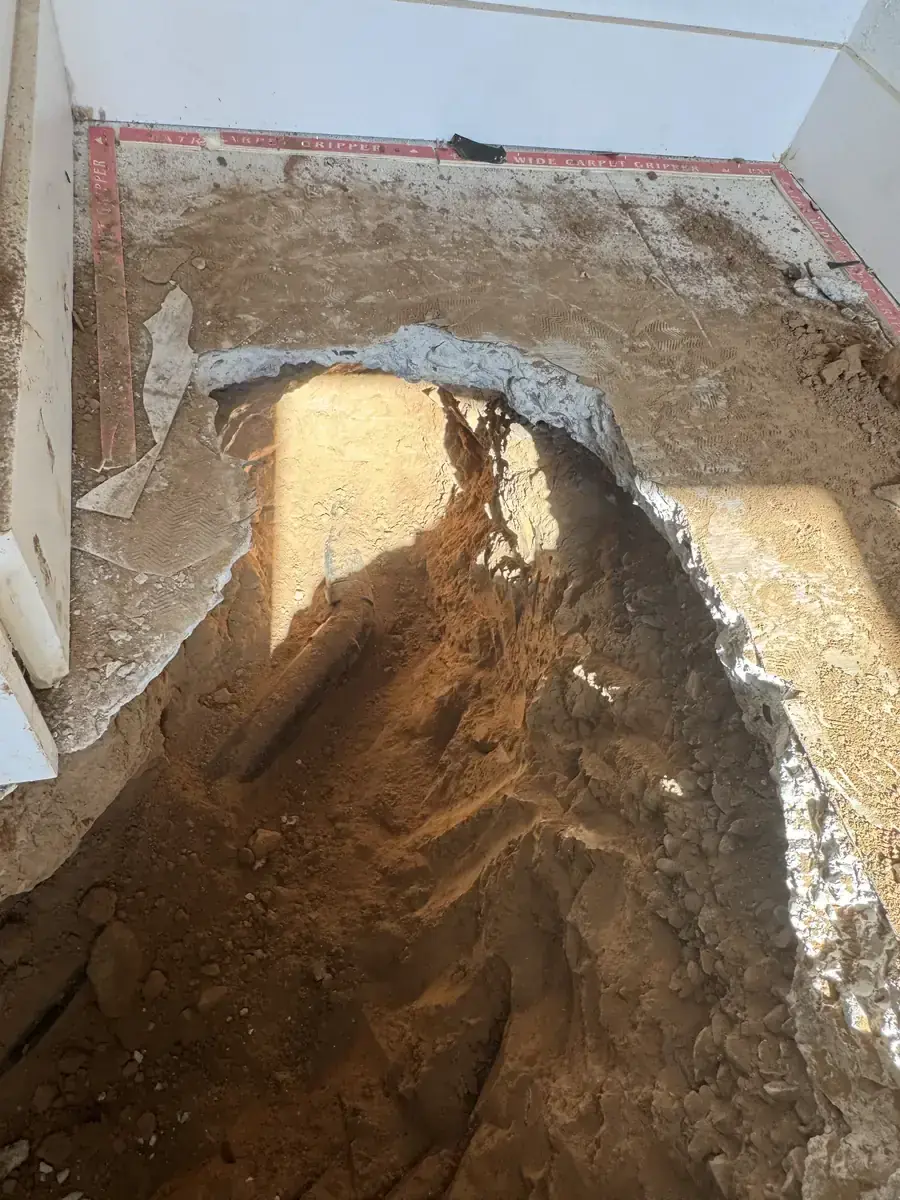
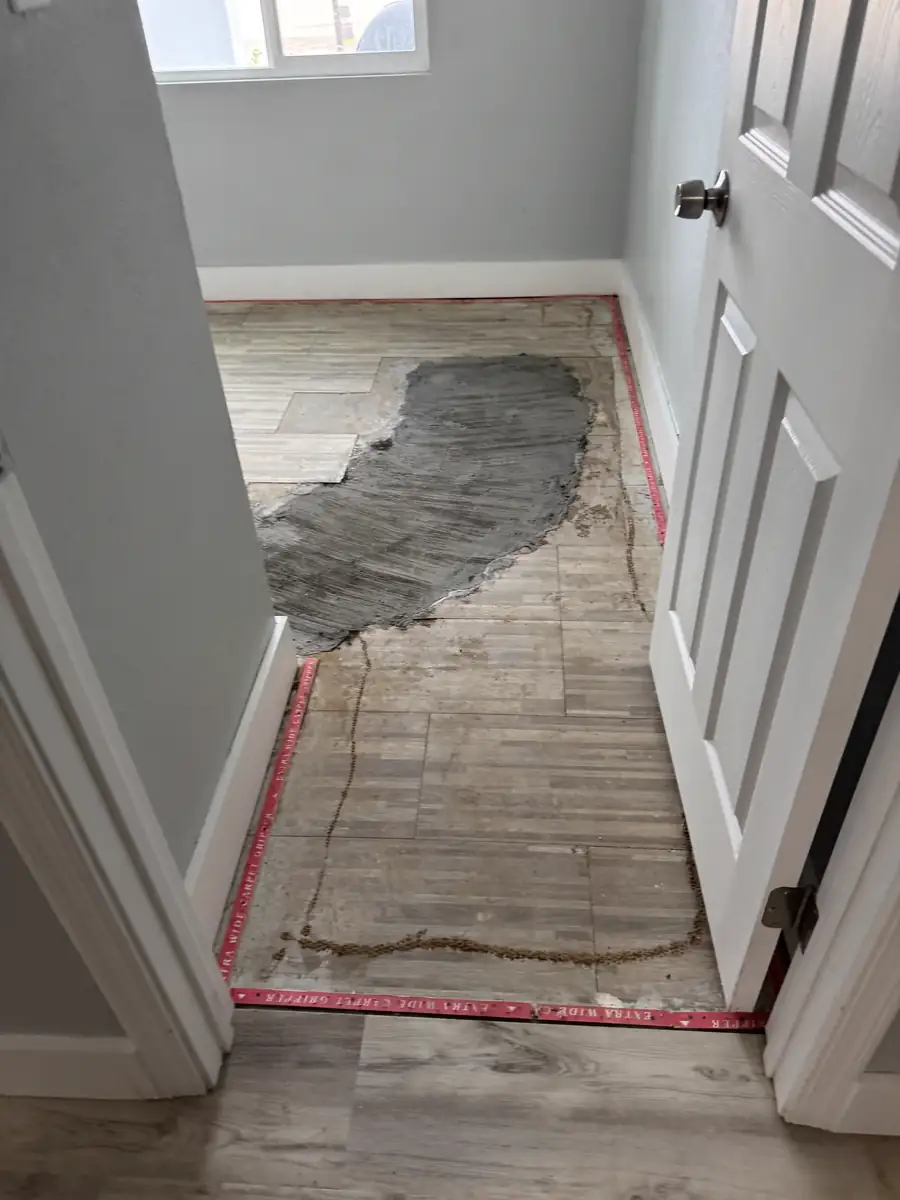
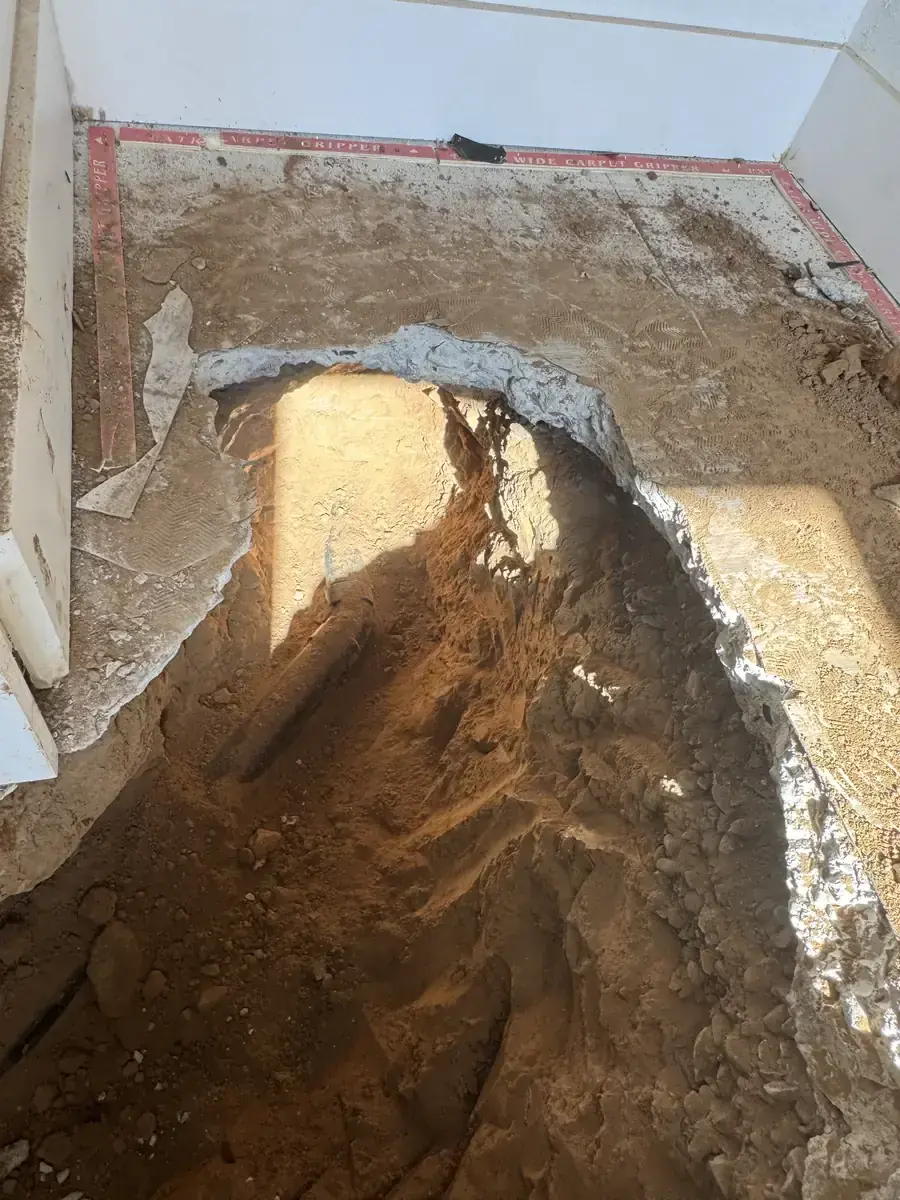
Plastic containment keeping dust out of the house during a Phoenix slab leak repair
How We Find a Slab Leak
We don't guess and we don't start breaking floor. A pressure test on the hot and cold sides tells us which line is leaking. Acoustic listening equipment picks up the sound of water escaping under the slab, and thermal imaging finds the warm track of a hot-side leak. Where the leak is small or deep, we charge the line with tracer gas and follow it to the surface. The result is a mark on the floor within a foot or two of the leak, so the repair is one opening, not a search. Leak location is a flat diagnostic fee that we quote when you call, and we tell you exactly how it applies to the repair if we do the work.
Three Ways to Fix It
Spot repair. We open the slab at the mark, repair that section of pipe, pressure-test it, and pour the concrete back level with the floor. Least disruptive, and the right call when the rest of the line is sound.
Reroute. We abandon the leaking line in the slab, cap it, and run a new line overhead through the attic and down the wall to the fixture. No floor is opened. This is our usual recommendation once a line has leaked, because copper that has failed in one spot is usually in similar shape a few feet away.
Whole-home repipe. For a house that has had more than one slab leak, or has galvanized or polybutylene lines on top of the copper, replacing every water line once is cheaper than chasing leaks one at a time. See whole-home repiping.
We show you the leak location, explain which option we'd choose for your house and why, and give you a written price for each before anything is opened.
Slab Leaks and Homeowners Insurance
Many Phoenix policies cover the cost of getting to the leak and repairing the damage it caused, even when they don't cover the pipe itself. We document the leak location, the cause and the repair in writing, with photos, so your adjuster has what they need. If you're not sure what your policy covers, call us first to stop the water, then call your insurer.
Questions We Get Asked
How do I know if it's a slab leak or something else?
The meter test is the quickest check. With everything off, a moving leak indicator means water is leaving the system somewhere you can't see. Warm floor spots point to a hot-side slab leak. A wet strip of yard between the street and the house points to the main water line instead, which is a different repair.
Do you have to break my floor?
Not always. If we reroute the line overhead, the floor is never opened. If a spot repair makes more sense, it's one opening at the leak, and we patch the concrete when we're done. Flooring over the patch is the homeowner's or a flooring contractor's job, and we'll leave it ready.
How long does a slab leak repair take?
It depends on the fix. We'll give you a time window with the written price once the leak is located.
Is a slab leak an emergency?
It's not a midnight call, but it isn't a wait-a-month problem either. Every day it runs adds water damage under the house and to your bill. If you can't shut the water off or water is coming up through the floor, call 602-428-2585 any hour.
Will it happen again?
If we spot-repair a line that has leaked once, there's a real chance another section goes later; that's why we usually recommend a reroute. A reroute or repipe in new PEX or copper ends the problem for that line.
Get a Rough Estimate
Tell us what’s going on and we’ll call you back, usually within the hour during business hours. Faster: text a few photos to 602-596-3013 and we’ll reply with a rough estimate.
Need a Plumber Today?
Call 602-428-2585 and talk to a real person, or send us the details and we'll call you back.